What Is a Character Reference in AI? The Complete Guide for 2026
One of the biggest frustrations people run into when they first start generating AI images is consistency. You create a character you love, a woman with red hair and sharp features, a man with a specific beard and jacket, a horror figure with a particular look. Then you generate another image and the character looks completely different. The face has changed, the proportions are off, and the feeling is gone. This is where character references in AI come in, and understanding them properly will change how you work with AI image tools entirely.
What Is a Character Reference in AI?
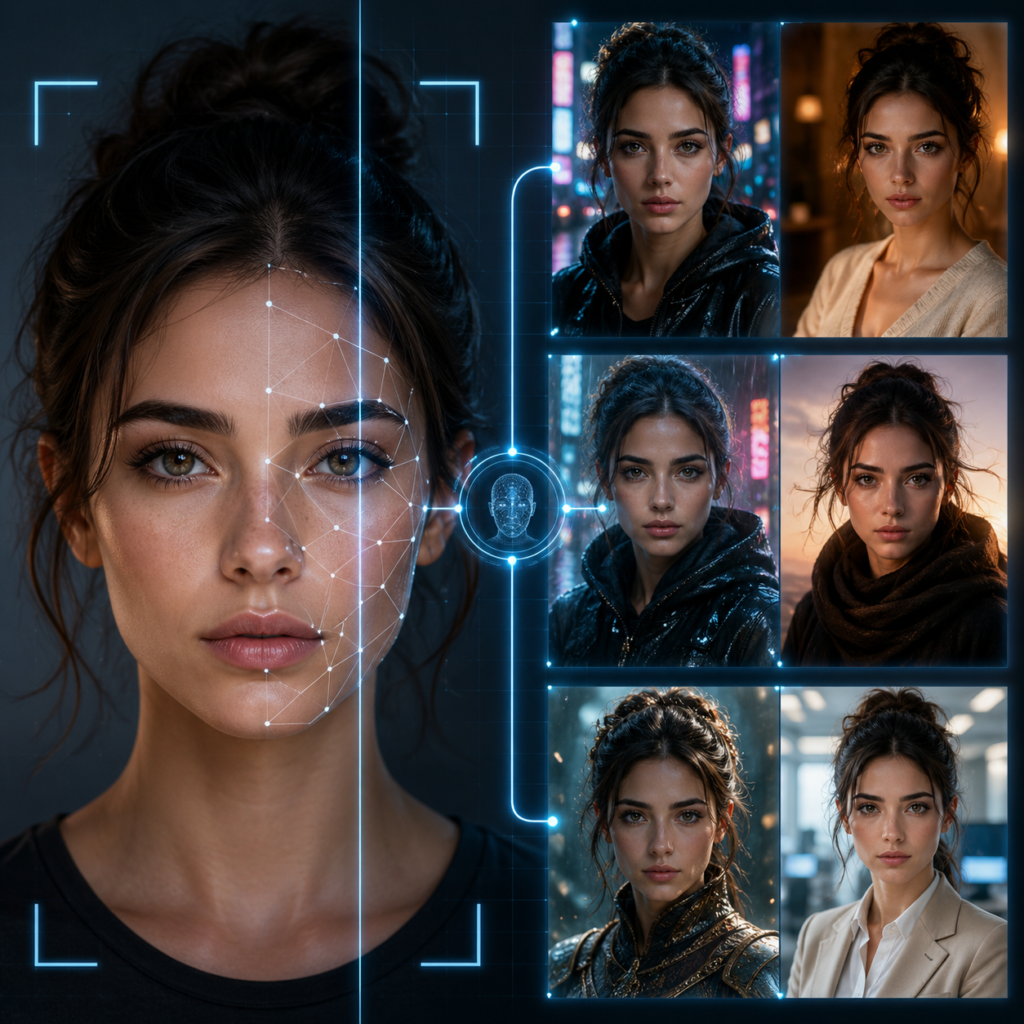
A character reference in AI is an image or set of images that you provide to an AI image generator to establish a consistent visual identity for a specific character. Instead of describing your character only in words, you show the AI what the character looks like. The AI then uses that visual information to maintain consistency across new generations, even when you change the scene, lighting, pose, or setting.
Think of it the way a film director thinks about a character bible. Before filming begins, there is a document that defines exactly how a character looks, how they dress, what their distinctive features are. Every scene in the film references that document to make sure the character looks the same whether they are in a sunlit park or a dark alley. A character reference in AI serves the same purpose, but instead of a written document it is a visual reference image fed directly into the generation process.
The result is that you can generate dozens or hundreds of images featuring the same character in completely different situations, and the character will be recognizably the same person across all of them. This is essential for storytelling, content series, social media branding, and any creative work that requires visual consistency.
Why Character References Matter for AI Image Generation
Without a character reference in AI, every image you generate of a person or character is essentially a fresh invention. The AI has no memory of what you generated before. You can write the most detailed text description possible, but text alone cannot capture the specific combination of features that makes a character uniquely recognizable. Hair color and eye color can be described, but the exact shape of a jaw, the specific angle of a brow, the way light hits a particular nose bridge, these things are almost impossible to pin down in words.
A character reference in AI solves this problem by giving the model something visual to anchor onto. The model can study the actual pixels of your reference image and extract the specific visual patterns that define your character. It then applies those patterns to new generations while following your new prompt instructions for scene, pose, mood, and style.
For content creators specifically, character references are what make it possible to build a recognizable visual brand around AI-generated characters. The most successful AI content accounts on Instagram and TikTok in 2026 are built around consistent characters that viewers recognize immediately. That consistency comes from character references.
How to Use a Character Reference in AI Image Tools
Different AI image tools handle character references in different ways. Here is how the main tools work.
Character Reference in Google Flow with Nano Banana Pro
Google Flow with the Nano Banana Pro model is currently the most accessible and capable free option for character reference work. The process is straightforward. You upload your reference image directly into the generation interface. The model analyzes the visual information in that image and uses it to anchor the character identity in your new generation. You then write your prompt as normal, describing the scene, lighting, mood, and any other elements you want, and the model generates a new image that maintains the visual characteristics from your reference.
Google Flow is free to use and requires no subscription, which makes it the best starting point for anyone learning how to work with character references in AI. The Nano Banana Pro model inside Flow is specifically strong at maintaining facial features and distinctive visual traits across different scenes and lighting conditions.
Character Reference in Midjourney
Midjourney introduced dedicated character reference support in version six and has refined it significantly since. To use a character reference in Midjourney, you attach an image URL to your prompt using the parameter format the platform requires. The model then treats that image as a visual anchor for the character identity in your generation.
Midjourney gives you control over how strongly the character reference influences the output. A higher reference weight keeps the character more strictly consistent with the reference image. A lower weight gives the model more creative freedom while still maintaining a general resemblance. Finding the right balance for your specific character usually takes a few test generations. You can find tested Midjourney horror character prompts on PromptieX that are already optimized for consistent character work.
Character Reference in Leonardo AI
Leonardo AI has strong character consistency features built into its interface. You can upload a reference image and the platform allows you to specify how much influence the reference should have on the generation. Leonardo AI is particularly useful for creators who need to generate large volumes of character-consistent images because its free tier is generous and the generation speed is fast.
What Makes a Good Character Reference Image for AI
Not every image works equally well as a character reference in AI. The quality and type of your reference image significantly affects how well the AI can maintain consistency in your outputs.
Use a Clear Face-Forward Shot
The best character reference images show the character’s face clearly, facing directly toward the camera or at a slight angle. The face should be well-lit with no harsh shadows obscuring features. Profile shots or extreme angles work less reliably because the AI has less information to work with about the full structure of the face.
Avoid Busy Backgrounds
A cluttered or visually complex background in your reference image can confuse the model and cause elements of the background to bleed into your new generations. A clean, simple background, plain white, neutral grey, or soft bokeh, helps the model focus on the character itself rather than the surrounding environment.
Choose a High Resolution Image
Higher resolution reference images give the model more visual information to work with. A low resolution or heavily compressed image loses fine details in the face and skin that the model needs to establish a consistent character identity. Aim for reference images that are at least 1024 pixels on the shorter side.
Match the Style of Your Output
If you are generating photorealistic images, use a photorealistic reference. If you are generating illustrated or stylized characters, use a reference in that style. Mixing a photorealistic reference with a stylized output prompt creates a tension that the model has to resolve, and the results are often inconsistent. Keeping your reference image in the same visual register as your intended output gives you much more predictable results.
Character Reference in AI for Horror Content
Horror content is one of the areas where character references in AI make the biggest difference. Horror characters are defined by very specific visual details, the particular pallor of skin, the exact shape of hollow eye sockets, the specific way a face is distorted. These details are almost impossible to recreate consistently through text description alone.
The most effective horror AI content creators use a two-step workflow. First they generate a strong base horror character image that captures exactly the look they want. Then they use that image as a character reference for all subsequent generations, whether they are creating still images in different scenes or using tools like Kling or Veo to animate the character into video content.
This approach is what makes it possible to build a recognizable horror character that appears across dozens of videos and images while maintaining the same unsettling visual identity throughout. You can browse the horror character reference prompts on PromptieX which are specifically built for this kind of consistent horror character work, or explore the full Artiexhouse horror AI video collection to see how character consistency is applied in complete video workflows.
Character Reference in AI vs Image Prompt: What Is the Difference
A common point of confusion is the difference between using an image as a character reference in AI versus using an image as a general image prompt or style reference.
When you use an image as a character reference, you are telling the model to preserve the specific identity of the person or character in that image. The model focuses on facial features, distinctive physical traits, and the specific visual signature of that individual.
When you use an image as a style reference or general image prompt, you are telling the model to capture the mood, composition, color palette, or aesthetic of the image rather than the specific identity of anyone in it. The model may use elements of the image for inspiration without trying to reproduce any specific person.
Most advanced AI image tools give you separate controls for these two types of reference. Understanding the difference and using the right type for your goal is what separates creators who get consistent, usable results from those who get unpredictable outputs.
Building a Character Reference Library for AI Content Creation
Once you understand how character references in AI work, the logical next step is to build a library of reference images for the characters you use most often. This is exactly how professional AI content creators approach their workflows.
A solid character reference library typically includes a clean face-forward shot of the character under neutral lighting, a three-quarter angle shot that shows more of the face structure, a shot of the character in the primary visual style you use for your content, and where relevant, shots that show distinctive clothing, accessories, or other identity markers.
Having multiple reference angles gives you more flexibility. Different generation scenarios work better with different reference angles. A front-facing reference works best for direct camera images. A three-quarter angle works better when you need the character in a scene where they are turned slightly away. Having both available means you can always pick the reference that will give you the most consistent result for the specific generation you are working on.
The free character reference prompt library on PromptieX includes prompts that have been tested specifically for character consistency across multiple generations. Each prompt is structured to produce images that work well as character references for subsequent generation rounds, so you can use them both as finished images and as starting points for building your own character reference library.
What Is a Character Reference in AI: Key Takeaways
A character reference in AI is a visual anchor that helps AI image generators maintain consistency for a specific character across multiple generations. Without it, every image of your character is a fresh invention. With it, you can build a recognizable visual identity that holds up across dozens or hundreds of images in completely different scenes and styles.
The best tools for character reference work right now are Google Flow with Nano Banana Pro for free generation, Midjourney for the highest aesthetic quality, and Leonardo AI for high volume work. The most important thing you can do to improve your results is to start with a clean, high resolution, face-forward reference image in the same visual style as your intended outputs.
For more practical AI image generation resources, explore the free character reference prompts, browse the best AI image tools rankings, or read the guide on what is generative AI for a broader foundation. And if you want to see character references used at a high level in horror AI content, follow Artiexhouse on Instagram where consistent character-based horror content is posted daily.